MANILA, Philippines - The Philippines, battered by at least 20 typhoons a year and deadly landslides, has drawn up a map of its disaster zones, the country's environment minister said Wednesday.
The online geo-hazard map covers more than 1,600 municipalities nationwide, and will allow individuals, local governments and developers to check whether their properties are in danger zones, Environment Secretary Ramon Paje said.
"Everyone can just go to the website and check the hazards pertaining to their locality," Paje told reporters.
"It says there (in the map), what is the permanent danger zone, what is hazardous and what are the low-lying areas."
The online map has been in the works since about 2006 but the urgency of the task was made clear only after tropical storm “Ondoy” (international name; Ketsana) struck the Philippine capital a year ago, bringing massive flooding and landslides.
About 80 percent of the capital was underwater as Ketsana dumped the heaviest rains in 40 years, triggering a humanitarian crisis that affected up to 10 million people, aid agencies said.
A second typhoon struck the country a week after Ondoy, and the storms left over 1,000 dead between them.
Paje noted that despite previous government warnings to leave areas considered dangerous, several communities in mountainous regions were buried by landslides triggered by Ondoy.
However Paje said the national government was not going to forcibly move people from dangerous places, stressing that it was up to the local governments to take what measures they think are necessary.
Tropical storms, floods, landslides, and maritime disasters killed nearly 2,000 people across the Philippines in 2009, the government said.
The archipelago in both the region's typhoon belt and on the Pacific "ring of fire" which brings frequent storms and quakes. Poor infrastructure and numerous unsafe sea vessels also result in frequent tragedies. - Agence France-Presse/inquirer.net, September 29, 2010
Showing posts with label Real Estate. Show all posts
Showing posts with label Real Estate. Show all posts
Saturday, October 2, 2010


Friday, September 10, 2010
Thinking about Receiving a Makati Condo? A Few Factors to Take into Consideration
It is no secret that Makati properties are known by the Filipino population as being among the most exclusive examples of Manila real estate. The area is the monetary main city of the Philippines, has got the most popular overseas buyers and commercial areas, and is a regional favorite among the most influential and trustworthy land administrators. A Makati condo is costly – especially for the common Filipino who scarcely has sufficient to survive with on an every day base – but it can be also an indication of obtaining the wealth and prestige essential to make one’s way in the Philippine equivalent of Wall Street.
One of the main motives a Makati condo is extremely valued is owing to the metropolis’s place in Philippine popular customs. Makati is the metropolis for business giants, for movers and shakers, and for the most successful men and women in the regional overall economy. It can serve as the stomping grounds of the old rich which, right up until lately, dominated Philippine industry. The notion of life in Makati is one that interests several men and women in the country for the reason that it is representational of having some claim of being on precisely the same level as the dominating political and fiscal agencies in the land. Dwelling in Makati is, in many ways, a proof that somebody has transferred up the economic scale and is more successful than the less well off parts of the public.
You’ll find furthermore highly functional reasons for why Manila real estate is at its most pricey in Makati. The biggest land builders in the nation, such as Ayala Land, ensure it is important to make use of the city as the area where they assemble their most focused, most exclusive constructions. As a consequence of the area’s position as a massive financial section, land builders fully understand that even though they commit lots of cash on supplying the very best lodgings and features for a Makati condo, they will be profiting from it in the long-term. The city encounters a near-continual stream of buyers, entrepreneurs, professionals, and managers, and more than a few of those would desire dwelling arrangements within the area. That gives a market that land developers can dependably tap into and that their competitors can also, which signifies they will try and one-up the other when it comes to Makati condo opportunities, capabilities, and recreation.
Makati’s status in Manila real estate as a location of comfort, security, and top quality with regards to residential options in addition plays a component in rendering the ordinary Makati condo more interesting. The Philippines, in spite of being considerably more westernized culturally than most nations in Asia, still possesses a holdover from potent Chinese societal influences that causes them to be moderately engaged with keeping image and popularity. This carries over, somewhat, in the development ventures in Makati. Given that it obtained a national image as a spot where the quality of living is above most of the nation, builders have seen fit to continue the good work. Culturally, this keeps the city’s image. In a financial sense, it additionally acts as a means of trying to keep the industry focused on what is offered.
The stature and good reputation that is linked to a Manila Makati condo, or any kind of real estate in the location, is one that is certainly ingrained in the modern-day Filipino consciousness. Makati is known as the area to be for people who would like to be effective. The appeal of this kind of placement, made up or real, is difficult to reject.
Since you are familiar with the advantages of residing in Makati, it is possible to Invest in the Philippines today. You’ll find a great deal of offered choices online. Check out RentInMakati.com Philippines Real Estate.
Source: http://articleresource.org/business/thinking-about-receiving-a-makati-condo-a-few-factors-to-take-into-consideration-73109
Real Estate: Think tank urges BIR to speed up REIT rules
MANILA, Philippines - A private think tank is urging the Bureau of Internal Revenue (BIR) to expedite the crafting of its implementing rules and regulations (IRR) on a new law designed to energize the Philippine capital market, spur big-ticket real estate investments and broaden the participation of retail investors and the rest of the public in such projects.
This new law—the Real Estate Investment Trust (REIT) Act of 2009—is meant to make the country’s real estate market a lot more attractive to foreign investors and fund managers and at the same entice retail investors to take part in large-scale infrastructure projects through stock offerings, according to the private think tank Forensic Law and Policy Strategies, Inc. (Forensic Solutions).
Headed by former Justice Secretary Alberto Agra, Forensic Solutions pointed out in its 7th policy paper that the REIT law also aims to protect the investing public by providing a regulatory framework and environment under which real estate investment trusts, through certain incentives, can prosper and attain the government’s goal of stimulating the domestic capital market.
“REITs are generally stock corporations that invest primarily in real estate and qualify for special tax status. These companies are publicly listed and are viewed as liquid real estate investments because investors are able to liquidate their position in a short time frame, despite the volatility in equity prices,” it said.
Republic Act 9856 or the REIT Act of 2009, lapsed into law on Dec. 17, 2009, but up to now, only two of three concerned agencies—the Securities and Exchange Commission (SEC) and the Philippine Stock Exchange (PSE)–have issued their counterpart rules and regulations governing REITs.
The third agency—the BIR—has yet to come up with its own set of IRR for REITs, Agra said in the paper, which he co-wrote with Maricel Baltazar, a tax practitioner and former executive of both Pricewaterhouse Coopers Manila and SGV & Co.
Agra and Baltazar noted that the BIR has yet to release the IRR apparently because of several issues governing real estate investment trusts, such as the period of collecting deficiency taxes from delinquent REITs and the imposition of additional tax charges with the revocation of the tax incentives of REITs once they are delisted from the PSE.
Under the law, these REIT companies enjoying tax privileges will be delisted as public companies once they fail to comply with certain requirements, such as their continued status as publicly listed companies and the release of 90 percent of their distributable incomes.
To encourage investors to participate in REITs, Agra and Baltazar said the law grants them several incentives, which include reduced documentary stamp tax rates, lower withholding taxes and exemptions from the payment of the corporate income tax.
“Admittedly, granting tax incentives will erode the government’s collection efforts. However, if the government sincerely intends to develop the capital market, level the playing field and give opportunities for retail investors, the government must give a chance and encourage the development of REITs as a possible source of investment and another avenue for foreign investors to invest in real estate in the country,” they added.
In its latest policy paper, Agra and Baltazar noted that the REIT law has long been awaited by the business community, with big companies such as Ayala Land, Robinsons Land and SM Prime Holdings reportedly interested in using this as a vehicle to further expand their real estate investments.
They called on the government to seize the opportunities and benefits offered by the REIT law in developing and strengthening the country’s capital market, which are now being enjoyed by other countries that have enacted their respective versions of REITs legislation, such as Japan, South Korea Singapore, Hong Kong, Taiwan, Malaysia and Thailand.
“Presently, Hong Kong, Singapore and Malaysia are reaping the benefits of REITS as an investment vehicle with a weighted average dividend yield of 8.1%, 8.9% and 3.7%, respectively. The government must issue regulations which are responsive to industry growth and which allows the Philippines to participate in this billion-dollar industry and benefit from its economic viability,” they said. - Mary Ann Ll. Reyes (The Philippine Star), September 10, 2010
This new law—the Real Estate Investment Trust (REIT) Act of 2009—is meant to make the country’s real estate market a lot more attractive to foreign investors and fund managers and at the same entice retail investors to take part in large-scale infrastructure projects through stock offerings, according to the private think tank Forensic Law and Policy Strategies, Inc. (Forensic Solutions).
Headed by former Justice Secretary Alberto Agra, Forensic Solutions pointed out in its 7th policy paper that the REIT law also aims to protect the investing public by providing a regulatory framework and environment under which real estate investment trusts, through certain incentives, can prosper and attain the government’s goal of stimulating the domestic capital market.
“REITs are generally stock corporations that invest primarily in real estate and qualify for special tax status. These companies are publicly listed and are viewed as liquid real estate investments because investors are able to liquidate their position in a short time frame, despite the volatility in equity prices,” it said.
Republic Act 9856 or the REIT Act of 2009, lapsed into law on Dec. 17, 2009, but up to now, only two of three concerned agencies—the Securities and Exchange Commission (SEC) and the Philippine Stock Exchange (PSE)–have issued their counterpart rules and regulations governing REITs.
The third agency—the BIR—has yet to come up with its own set of IRR for REITs, Agra said in the paper, which he co-wrote with Maricel Baltazar, a tax practitioner and former executive of both Pricewaterhouse Coopers Manila and SGV & Co.
Agra and Baltazar noted that the BIR has yet to release the IRR apparently because of several issues governing real estate investment trusts, such as the period of collecting deficiency taxes from delinquent REITs and the imposition of additional tax charges with the revocation of the tax incentives of REITs once they are delisted from the PSE.
Under the law, these REIT companies enjoying tax privileges will be delisted as public companies once they fail to comply with certain requirements, such as their continued status as publicly listed companies and the release of 90 percent of their distributable incomes.
To encourage investors to participate in REITs, Agra and Baltazar said the law grants them several incentives, which include reduced documentary stamp tax rates, lower withholding taxes and exemptions from the payment of the corporate income tax.
“Admittedly, granting tax incentives will erode the government’s collection efforts. However, if the government sincerely intends to develop the capital market, level the playing field and give opportunities for retail investors, the government must give a chance and encourage the development of REITs as a possible source of investment and another avenue for foreign investors to invest in real estate in the country,” they added.
In its latest policy paper, Agra and Baltazar noted that the REIT law has long been awaited by the business community, with big companies such as Ayala Land, Robinsons Land and SM Prime Holdings reportedly interested in using this as a vehicle to further expand their real estate investments.
They called on the government to seize the opportunities and benefits offered by the REIT law in developing and strengthening the country’s capital market, which are now being enjoyed by other countries that have enacted their respective versions of REITs legislation, such as Japan, South Korea Singapore, Hong Kong, Taiwan, Malaysia and Thailand.
“Presently, Hong Kong, Singapore and Malaysia are reaping the benefits of REITS as an investment vehicle with a weighted average dividend yield of 8.1%, 8.9% and 3.7%, respectively. The government must issue regulations which are responsive to industry growth and which allows the Philippines to participate in this billion-dollar industry and benefit from its economic viability,” they said. - Mary Ann Ll. Reyes (The Philippine Star), September 10, 2010
Sunday, April 4, 2010
Boracay 2 triggers real estate rush
THE construction of Boracay 2, the controversial international airport in Romblon, is now in full blast with foreign and local investors rushing in to buy prime properties in Carabao island, the municipal mayor of San Jose said in a statement Sunday.
Mayor Filipino Tandog said 1.8 kilometers of the runway was constructed out of the P3-billion private initiative project that is expected to be operational by 2012.
In a meeting with President Gloria Arroyo in Malacañang last month, the President assured Romblon Rep. Leandro Jesus Madrona and Gov. Natalio Beltran III and other provincial officials that the Carabao airport project will “materialize” even with the Caticlan airport upgrade project where food and beverage conglomerate San Miguel Corp. was interested, Tandog said.
Tandog chided officials of the Department of Transportation and Communications for saying that the Carabao island airport will not push through because of the air traffic and the prohibition of having two international airports within 50 kilometers.
“We don’t care about the Caticlan airport expansion. No matter what our detractors say, what we can say is we have our own international airport in Carabao island in Romblon that is being financed by private businessmen and not by the government,” he said. “We have started the project since late last year or earlier than the ground breaking of the Caticlan airport expansion.” - by Nick Ferrer, Manila Standard Today
Mayor Filipino Tandog said 1.8 kilometers of the runway was constructed out of the P3-billion private initiative project that is expected to be operational by 2012.
In a meeting with President Gloria Arroyo in Malacañang last month, the President assured Romblon Rep. Leandro Jesus Madrona and Gov. Natalio Beltran III and other provincial officials that the Carabao airport project will “materialize” even with the Caticlan airport upgrade project where food and beverage conglomerate San Miguel Corp. was interested, Tandog said.
Tandog chided officials of the Department of Transportation and Communications for saying that the Carabao island airport will not push through because of the air traffic and the prohibition of having two international airports within 50 kilometers.
“We don’t care about the Caticlan airport expansion. No matter what our detractors say, what we can say is we have our own international airport in Carabao island in Romblon that is being financed by private businessmen and not by the government,” he said. “We have started the project since late last year or earlier than the ground breaking of the Caticlan airport expansion.” - by Nick Ferrer, Manila Standard Today
Friday, April 2, 2010
Bargain rent to own condominiums in Manila (Cubao, Quezon City)
Two condominium units in Manila - 1-bedroom with toilet and bath and studio type units - are on rush sale. Owners need to sell the units before April 9, 2010. Because of their strategic locations in Cubao, these condominiums in Manila will sell like hot cakes.
The rent to own scheme let you own the condo after a few years. Instead of looking for houses or apartments for rent in Manila, these are the better choices. You will have a Manila property while you are still working abroad. Read more about these condominiums in Manila.
Inside the 1 bedroom unit
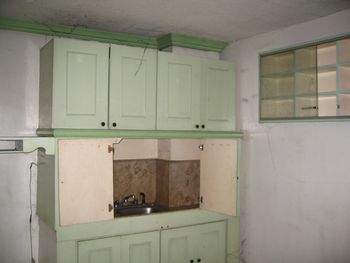
Click here for more information about these rent to own condominiums in Manila.
Inside the studio type condo unit
 Click here for more information about these rent to own condominiums in Manila.
keywords: apartment for rent in manila, apartments for rent in manila, apartments in manila, condo in manila, condominiums in manila, houses for sale in manila, houses in manila, manila apartment, manila apartments, manila houses, manila pictures, manila property, manila real estate, manila rentals, real estate manila
The rent to own scheme let you own the condo after a few years. Instead of looking for houses or apartments for rent in Manila, these are the better choices. You will have a Manila property while you are still working abroad. Read more about these condominiums in Manila.
Inside the 1 bedroom unit
Click here for more information about these rent to own condominiums in Manila.
Inside the studio type condo unit
Click here for more information about these rent to own condominiums in Manila.keywords: apartment for rent in manila, apartments for rent in manila, apartments in manila, condo in manila, condominiums in manila, houses for sale in manila, houses in manila, manila apartment, manila apartments, manila houses, manila pictures, manila property, manila real estate, manila rentals, real estate manila
Tuesday, February 16, 2010
Overseas Pinoys loom larger in developers’ radar
DEVELOPERS, particularly those who have established strong international sales teams and connections abroad, are hearing “ka-ching, ka-ching!” in their minds, especially when 2010 plans involve the overseas Filipino market. Simply put, this year developers are bracing for a surge in demand from overseas.
Francis Roxas, general manager for Ayala Land International Sales, recently revealed this much to Inquirer Property.
Overseas purchases make up about a quarter of total Ayala Land sales. Alveo Land, another Ayala Land company, estimates that almost a fifth of its sales, or 19 percent, come from the overseas Filipinos market, according to Nerissa Josef, vice president for project management of Alveo Land.
“As the world economy recovers from the financial crisis, we foresee increased sales coming from overseas Filipinos both as a result of rising incomes as well as improving confidence and sentiment,” Roxas said.
Vista Land & Lifescapes Inc. also believes overseas sales will continue to be strong this year, explaining that most Filipinos working abroad receive competitive salaries.
Benjamarie Therese N. Serrano, director, president and chief operating officer of Vista Land & Lifescapes, said many Filipinos working overseas are professionals with steadily increasing income levels. Seafarers, in particular, are in high demand with high salary rates.
More than 60 percent of Vista Land’s total revenues come from OFW purchases. This is consistent with Camella being a well-known and trusted brand among OFWs, according to Serrano.
Stronghold
Ayala Land has traditionally had a strong presence in North America, where the bulk of its international sales has originated in the past five years. Roxas added that this key market, though, had not been spared by the financial crisis in the past two years, and the numbers have been considerably lower than the years prior to the crisis.
“The bright side is that we purposely developed other markets that before 2007 were not priority areas for us. These were the Middle East and Europe markets where our sales base had been low and where we did not see significant declines in relative incomes of overseas Filipinos.”
Serrano said Vista Land has been “extremely familiar with the OFW market, having been the first to seriously market our products to them.”
Vista Land has a broad range of products that cater to a wide range of budgets. “Our brands and track record, especially the Camella brand, are well-known and trusted by the OFW market.”
“Over the years, we have built a strong marketing network both here and overseas. These relationships proved to be crucial in bringing in sales during difficult periods,” she said.
“ALI’s advantage over many other developers is that it has built a name that clients can trust and a reputation for delivering products of high quality that retain if not increase in value over time,” Roxas said.
According to Roxas, the biggest obstacle to the OFW market is in getting them to commit to pay a significant amount of money based on the promise to deliver made by a company halfway across the world. The client would almost always want to see the product first before paying up. Those that are able to resolve this matter of trust, he said, eventually become clients, many of whom will purchase multiple products over their overseas work assignments.
And amid tried and tested developers, there are still fly-by-night firms that prey on hapless overseas Filipinos, an obstacle that Serrano admitted is hard for the local property sector to hurdle.
Serrano said that developing properties outside of Mega Manila, and thus closer to many overseas Filipinos home provinces, could be advantageous. “Armed with the insight that many OFWs prefer to own property in their hometown provinces, the company has acquired previously identified properties outside of Mega Manila. As such, even far-flung areas where overseas Filipinos claim to have their roots have become areas of opportunity,” she said. - Tessa Salazar, Philippine Daily Inquirer, February 12, 2010
Saturday, January 2, 2010
Factors to Consider When Buying Land in The Philippines
When looking for homes in Philippines, one needs to consider the following factors:
Terrain
The whole country features a myriad of unique terrains and the people have learned to adapt to these unique conditions in order to survive. As testimony, homes in philippines may range from huts and elevated cottages to brick mansions depending on the condition of the terrain where the homes are built on. Those that are situated near bodies of water, such as in the case of beach houses, are equipped with measures to withstand heavy and occasional typhoons, frequent tide changes and even tsunamis; while those that are built on sloping mountain sides are layered and feature pilot rooms adjoined by bridges and beautiful walkways to minimize risk of collapse and subsidence.
The country has several different terrains to offer so one has to carefully think about which terrain should his/her home stand on.
Accessibility
Since the country is still on its way to development in terms of economy and infrastructure, one needs to consider how accessible a particular location is. Those that are easily accessible and are located in fully-developed and highly urbanized areas usually cost significantly more than those that are less developed. The accessibility to familiar and essential establishments such as schools, churches, malls, and hospitals also become of a factor that dictates how much a piece of land costs.
This, however, seems less of a concern for most Filipinos because a lot of homes in philippines are built without accessibility as a consideration. Most of them, of course, are built by squatters or land grabbers.
Price
Price is always a consideration whether you want to build a home in the Philippines or in other countries. However, since the Philippines is considerably young especially in terms of economic development, its lands cost generally less than those in other countries.
Several factors are responsible for this. Some of these factors include the first two mentioned above. Since the Philippines offers a greater variety of terrain and, consequently varying degrees of accessibility, it has a greater range of prices to offer. The flatter and the more stable a terrain is, the higher its cost gets. Similarly, the more accessible the land becomes, the greater its price becomes.
Other factors include the name of the developer selling the land. The more popular realty companies have built their reputation on years of good and quality service so the more familiar (or popular) the realty company selling the land is, the more expensive the price tag of the land gets.
Another factor that may affect the price of the land is its exclusivity. The more exclusive the land is, the higher its cost gets. Apparently, in the Philippines, privacy comes with a hefty price tag. For more information visit to our site at http://www.atayala.com
Doctor builds hospital cum hotel in Capiz
ROXAS CITY, Philippines – The first-ever “hospitel” – a hospital and hotel – in the Visayas will soon rise in Capiz at a cost of P450 million.
A simple groundbreaking ceremony was held last Tuesday on the 30-hectare development site in this city.
Capitalizing on the growing popularity of the medical hotel concept and backed by the results of studies conducted, the project involves the construction of a 100-bed tertiary hospital –a well-equipped facility offering a full range of medical services – with an adjoining hotel.
To be known as The Health Centrum, the facility will be at the heart of the 30-hectare complex owned by the Balgos Family located in Roxas City’s Barangay (village) Banica. It will be financed by a loan from the Land bank of the Philippines.
The entire property is envisioned to become a fully sufficient community with areas earmarked for nursing and medical training school, housing for medical practitioners, a retirement village, residential subdivision, and commercial establishments.
Doctor Abundio Balgos, currently based in Metro Manila, said the planned integrated hospital, hotel, and mall complex would serve clients not only from Roxas City and province but also other parts of Panay, such Iloilo, Aklan, Antique, and Boracay Island, as well as Masbate and the northern part of Palawan, which are nearby.
Balgos said the hospital would offer modern and state-of-the-art general and specialty medical services, as well as a resort/out-patient/long-term care and treatment facility.
The hotel will also serve the patients of the hospital, both in-patients requiring nursing care, pain management or observation services for their recuperation, and out-patients requiring temporary accommodation before and after their medical exams, he added.
Because of its proximity to island resorts and diving spots, the facility will also have a decompression chamber, he added.
According to the plan, a mall adjacent to the hospital and hotel will also be built.
The property is close to the College of St. John – Roxas, a De La Salle supervised school, which has elementary, high school, and college that offers a nursing course.
An 11-hectare residential subdivision intended to serve as a retirement village, is also planned, he said.
Balgos said medical tourism would enhance the viability of the project once the institution was able to establish a good reputation built on competent medical specialists, nursing care, state-of-the-art equipment, and a center for alternative medicine.
Balgos said the development would cover a period of 10 years. The total project cost was based on a set of technical studies conducted by a team of doctors, architects and engineers.
As main proponent of the project, Balgos said he would relocate his medical practice to Roxas City when the project starts operations. - Felipe V. Celino, Inquirer Visayas, January 02, 2010
Thursday, December 31, 2009
New forces in the world of property
I firmly believe the story of the early part of the 21st century will be the shift of power, in real estate terms at least, from the established western nations of Europe and North America to emerging countries from other continents. Even in the recession you can see that theory remains valid with the continued growth of China and the promise of Brazil, India and parts of the Middle East. Now, with the opening of Burj Dubai on January 4, there is a potent symbol of how ambitious these 'new forces' are in the world of property.
Standing at over 818 metres the tower is the world's tallest building but its significance is more than mere height. That building work continued at all, at a time when rival towers were scaled back or foundered in the recession, is a forceful indicator of the emerging markets' determination.
Of course within Dubai, the project is more than merely a tower, spanning as it does some 500 acres and including two retail malls, five hotels, offices and residential units. But around the rest of the world, it is a sign of undiminished ambition.
Contrast it with what is happening in Chicago. True, this handsome US city is in the throes of a reshaping of its skyline but the scheme has been derailed by the downturn. The Chicago Spire – despite the razzamatazz of Santiago Calatrava's design, much publicity and even plenty of advance sales of its apartments – has nothing to show for a decade of planning except for some empty foundations. Rumour has it, the tower may now never be built. Meanwhile, the recently completed Trump Tower just a few blocks away looks splendid but is a much-reduced version of what was originally planned for the site in 2000 but then scaled sharply downwards after the 9/11 attacks.
Of the other new super-tall towers being planned around the world, relatively few are in 'established' property markets.
For example, the Pagcor Tower, standing 665 metres tall, will be in Manila Bay in the Philippines; its groundbreaking was held in 2009 and work will take some years, but it is already being mooted as a potent symbol for Asia's growing economy.
The Lotte Super Tower 123, likely to be 555 metres tall, will be a mixed use scheme like Burj Dubai and will open in 2014 in Seoul, South Korea.
Work is well underway on the Shanghai Tower, expected to top out at 632 metres and featuring nine indoor gardens by the time it is scheduled for completion in China's second city in 2014.
The Port Tower is under consideration in the Pakistan financial hub of Karachi and will be 593 metres high according to early plans. There are plenty more towers at least at design stage in emerging markets, while of course the western world has ambitious plans too.
World Trade Center is finally under construction in New York and of course will have immense symbolic importance for the entire world when it is finished. London's Shard of Glass tower, a remarkable design, will be completed for that city's
Olympic Games in 2012, by which time the new tower will be the tallest in the European Union at 310 metres. And in Paris there will be the slightly more modest French Tour Generali, hitting 308 metres.
So the West has not stopped being creative. But the broader point, worth remembering at the start of a new decade, is that just a few decades ago any such ambitious design boasting a record-breaking tall tower would have been found only in the West. Now these daring projects are at least as common in emerging markets, and indeed may be more likely to be initiated there than in a recessionary West that is increasingly frightened of its financial fragility.
So the significance of the Burj Dubai's launch is not just to show that the emirate has good news to tell after the traumas of 2009, but that the whole region is still a 'coming force'. The Burj launch also coincides with the UAE rising from 31st to 18th place in the 2010 Real Estate Global Opportunity Index from AT Kearney, a consultancy that focuses on emerging markets and advises property developers on where to expand outside familiar regions.
These symbols show why it is right to be optimistic, even in difficult times. We are, after all, only a tenth of the way through the 21st century – and time is on the side of the emerging nations. - Graham Norwood on Thursday, December 31, 2009 (Emirates Business)
- Graham Norwood is a property correspondent for The Observer
Sunday, December 6, 2009
Philippine floods spur move to high-rises
MANILA: High-rise living has suddenly become more popular in Manila after killer storms caused massive flooding in the Philippine capital, property industry officials said here on Tuesday.
Businesses are also moving to higher ground to avoid a repeat of the devastation from recent storms, which killed more than 1,100 people in Manila and other parts of the island of Luzon, the officials told a business forum.
"More Filipinos will embrace high-rise living. They still prefer single-detached homes, but now they are more open to high-rises," Robinsons Land Corporation vice president Henry Yap told the forum.
After the storms "we had a barrage of calls (from people) wanting to rent out our high-rise units."
Tropical storm Ketsana dumped the heaviest rains in more than four decades on Manila on September 26, leaving more than 80 per cent of the city flooded.
This was compounded a week later by Typhoon Parma, which caused most damage further north on Luzon but also brought more rains to Manila.
Nearly two months after Ketsana, hundreds of thousands of people are still living in flooded areas on the outskirts of Manila.
"Some people were traumatised (by the floods) and don't want to go home," said Corazon Guidote, head of SM Investments Corporation, a holding company with real estate interests.
"You can already see a migration to certain areas. People are going to areas which are of higher elevation. Rental rates in some areas have gone up because of the migration. There will be more demand for high-rises," he added.
However, Guidote did not give specifics.
Other companies said they were also reviewing their plans for disaster preparedness in the wake of the floods.
"We are putting some of our treatment plants on stilts," said Frank Beaumont, group director of Manila Water Company, the capital's main water distributor. - AFP/sc, channelnewsasia.com, 17 November 2009 1718 hrs (SST)
Businesses are also moving to higher ground to avoid a repeat of the devastation from recent storms, which killed more than 1,100 people in Manila and other parts of the island of Luzon, the officials told a business forum.
"More Filipinos will embrace high-rise living. They still prefer single-detached homes, but now they are more open to high-rises," Robinsons Land Corporation vice president Henry Yap told the forum.
After the storms "we had a barrage of calls (from people) wanting to rent out our high-rise units."
Tropical storm Ketsana dumped the heaviest rains in more than four decades on Manila on September 26, leaving more than 80 per cent of the city flooded.
This was compounded a week later by Typhoon Parma, which caused most damage further north on Luzon but also brought more rains to Manila.
Nearly two months after Ketsana, hundreds of thousands of people are still living in flooded areas on the outskirts of Manila.
"Some people were traumatised (by the floods) and don't want to go home," said Corazon Guidote, head of SM Investments Corporation, a holding company with real estate interests.
"You can already see a migration to certain areas. People are going to areas which are of higher elevation. Rental rates in some areas have gone up because of the migration. There will be more demand for high-rises," he added.
However, Guidote did not give specifics.
Other companies said they were also reviewing their plans for disaster preparedness in the wake of the floods.
"We are putting some of our treatment plants on stilts," said Frank Beaumont, group director of Manila Water Company, the capital's main water distributor. - AFP/sc, channelnewsasia.com, 17 November 2009 1718 hrs (SST)
Thursday, November 19, 2009
Experts’ advice in buying first home
Charles E. Buban
Philippine Daily Inquirer
November 13, 2009 20:40:00
MANILA, Philippines--Having a house that one can call his own remains one of the lifelong objectives for a lot of Filipinos.
This would probably explain why even during the height of the global financial crisis, Filipinos hardly missed a beat buying their dream home.
In fact, bank lending to the real estate sector, both for personal and commercial construction of houses remained relatively high according to Antonio Moncupa, president of EastWest Banking Corp.
“In general, when you talk about Filipinos, there’s really a big, big desire to own a house. That’s what distinguishes us from the rest of Asia and other markets,” he noted.
This also means lots of emotions involved when deciding which home to buy.
“Buying a house is one of the major investments they will ever make in their lifetime so quality and the so-called look and feel of the house they are considering is important,” architect Roger Villarosa said.
Preference
According to him, majority of Filipino homebuyers would rather prefer a spacious floor space like what is being offered at West Parc Condominiums, a 15-story project in Alabang that Villarosa helped design for Filinvest.
“The units here offer ample space that matches every homebuyer—from yuppies and retired couples who would rather prefer a much smaller, more manageable space to newlyweds and growing families who would naturally require more space. In fact, if they want an even bigger space West Parc Condominiums could combine adjacent units,” Villarosa described.
For Filinvest, he also designed several projects that offer excellent location.
“Location would be the main draw of The Entrata and Studio Two, which are just among the many vertical projects of the Filinvest Group,” Villarosa said.
Occupying an entire block, he said The Entrata enjoys a prime location as it is flanked by Festival Supermall and South Station.
While The Entrata is master-planned commercial, retail, Small Office-Home Office complex situated at the main gateway to Filinvest Corporate City, the Studio Two is a 14-story residential condominium located inside Northgate Cyberzone in Filinvest Corporate City, Alabang.
While buying a home is challenging and emotional Moncupa and Villarosa shared that the following tips should prove useful:
1 Make sure you are buying from a reputable developer. Remember the real estate bubble of the late ’90s when a lot of developers failed to deliver on their promises? The most important lesson from that bubble is to stick with the developer you can trust. “There is a huge difference between, say, a name like Filinvest and another unknown name,” Moncupa suggested. As one of the country’s largest and most diverse developers, Filinvest has developed more than 2,000 hectares of land for 100,000 families nationwide for the past 40 years.
2 Canvass mortgage loan terms. “On anything that’s a major purchase, it is still best to make sure the mortgage loan term is workable on the long-term,” Moncupa suggested. For some, monthly amortization will be the center of concern, for some interest rates. Generally, the lower the monthly mortgage payments, the higher the interest rates.
3 Take time to assess what you want versus what you can afford. “Life is all about estimating reality. Those who can estimate nearest to reality will be happier. Be sure you understand your true situation and that your income is consistent with your dreams,” Moncupa advised. What happens when you don’t? Moncupa warned that you may suffer from foreclosure. He said make sure to balance affordability and marketability of your house, so that if things get difficult financially, you can sell it at a higher price.
4 Plan ahead with the size of your family in mind. If you are a newly married couple, it may be more realistic to invest in a home where children can have a room of their own or ample space for them to run free. Consider buying a one- to two- bedroom unit rather than a studio-type unit.
5 Pay close attention to lighting and ventilation. The standard size for windows is 1.2 x 1.2 meters. Ample-sized windows allow for good lighting and ventilation. “Good ventilation will help you reduce air-conditioning and lighting costs in the long-term,” Villarosa said.
6 Be sure you check for anti-termite treatment. “Termites can eat up your entire house in a year,” Villarosa reminded so ask if there is soil poisoning in the area and make sure your new home is treated against these voracious pests.
7 As much as possible, go for long-term, fixed home-lending rates. Moncupa suggested that mortgage rates now among banks don’t vary much, and if these rates will go up in the future, they will not be far from the 8 to 9 percent rate banks currently charge. However, to be sure sudden market volatility caused by unforeseen financial upheavals doesn’t hit you, go for long-term fixed rates. Home loans are good debt; they give you a good place to stay, as well as equity in an asset that you can sell in the future. “Don’t look at your house only as fulfillment of your dreams, but also as savings,” Moncupa said.
8 Shop around for mortgage redemption insurance. A few know that it is against Bangko Sentral ng Pilipinas’ regulations for banks to require their borrowers to get mortgage redemption insurance—insurance that protects the bank in case the borrower dies—from the bank itself. So shop around because the premium rates for MRI vary widely among banks, and if you find the rates steep, don’t be shy to ask for a discount.
9 Put your family in mind. Don’t just go for the cheaper alternative. Always have your family’s interest at heart when you buy a home. Offer them peace of mind in a home they can also love and embrace as their own.
10 Whatever you do, think carefully and objectively. Take your time. Doing this right will help you truly enjoy the home of your dreams.
Monday, November 9, 2009
Why is the Philippines the best place to buy property in the world today
Where is one of the best places in the world to invest in a holiday property today, some would say that it is the Philippines islands and nowadays many people are seeking Philippines property as a holiday home and great investment.
Being an archipelago, the Philippines have plenty to offer in terms of natural resources. The 1000s of islands have numerous white and black sand beaches, making it eminently attractive to vacationers and tourists. The fantastic marine biodiversity creates abundant species of flora and fauna and an many tropical wildlife.
The Philippines is widely recognised as “the Pearl of the Orient Seas” and is situated 750 miles off main land Asia and many of the main islands have beautiful weather, amazing beaches and fantastic luxury of modern living.
The Philippines is not only the “Pearl of the Orient Seas” with regards to being a popular global tourism destination but this archipelago has also become a serious second home and investment destination within Asia drawing many investors from America , Asia, Europe and the Middle East are investing in Philippines property
Philippine Real Estate Market Buoyant Despite Global Crisis
Olivia Olarte 25 September 2009
“The Philippine real estate market has experienced a nominal year-on-year growth of 10 per cent for the last five years, despite recent events affecting the global property market” said. Tuano, who is also the chairman of the Philippine Business Council, Abu Dhabi, spoke to Khaleej Times ahead of next weekend’s Philippine Property Show, which is being held for the first time in Abu Dhabi.
One of the fasting moving emerging destinations in the Philippines is Palawan which has the “best beaches overall in Asia” say Conde Nast Traveller and National Geographic.
Banyan Tree a top end luxury resort company) have committed over $70m on two islands in Palawan, meaning the region will gain further exposure and interest form visitors and property investors alike.
One very notable new beyond eco resort in Palawan is Cacao Pearl
A fantastic private island resort will be host to a selection of custom designed and you decide to be on the beachfront or hidden within the rainforest, the bespoke, eco-friendly offers an opportunity of private island seven figure price tag.
Award Winning
Cacao Resorts won the award for Best Residential Development in Country for the Cacao Pearl, private island adventure in Palawan at the CNBC International Property Awards.
The private Island lifestyle offers a completely unique experience that’s impossible to replicate and quite compares with the feeling of being somewhere tropical with just a select number of fortunate people, all enjoying an exclusive lifetime experience.
It is this forward thinking and way of like of the tropical island experiences that attract a growing number of people and now property investors to the Philippines and in our opinion, if you are seeking a tropical climate, adventure and luxury as well as excellent financial returns with regard to rental income and capital growth then yes, the Philippines is the best country to buy property on the planet today.- admin, http://www.articlefeeder.com, October 30, 2009
Being an archipelago, the Philippines have plenty to offer in terms of natural resources. The 1000s of islands have numerous white and black sand beaches, making it eminently attractive to vacationers and tourists. The fantastic marine biodiversity creates abundant species of flora and fauna and an many tropical wildlife.
The Philippines is widely recognised as “the Pearl of the Orient Seas” and is situated 750 miles off main land Asia and many of the main islands have beautiful weather, amazing beaches and fantastic luxury of modern living.
The Philippines is not only the “Pearl of the Orient Seas” with regards to being a popular global tourism destination but this archipelago has also become a serious second home and investment destination within Asia drawing many investors from America , Asia, Europe and the Middle East are investing in Philippines property
Philippine Real Estate Market Buoyant Despite Global Crisis
Olivia Olarte 25 September 2009
“The Philippine real estate market has experienced a nominal year-on-year growth of 10 per cent for the last five years, despite recent events affecting the global property market” said. Tuano, who is also the chairman of the Philippine Business Council, Abu Dhabi, spoke to Khaleej Times ahead of next weekend’s Philippine Property Show, which is being held for the first time in Abu Dhabi.
One of the fasting moving emerging destinations in the Philippines is Palawan which has the “best beaches overall in Asia” say Conde Nast Traveller and National Geographic.
Banyan Tree a top end luxury resort company) have committed over $70m on two islands in Palawan, meaning the region will gain further exposure and interest form visitors and property investors alike.
One very notable new beyond eco resort in Palawan is Cacao Pearl
A fantastic private island resort will be host to a selection of custom designed and you decide to be on the beachfront or hidden within the rainforest, the bespoke, eco-friendly offers an opportunity of private island seven figure price tag.
Award Winning
Cacao Resorts won the award for Best Residential Development in Country for the Cacao Pearl, private island adventure in Palawan at the CNBC International Property Awards.
The private Island lifestyle offers a completely unique experience that’s impossible to replicate and quite compares with the feeling of being somewhere tropical with just a select number of fortunate people, all enjoying an exclusive lifetime experience.
It is this forward thinking and way of like of the tropical island experiences that attract a growing number of people and now property investors to the Philippines and in our opinion, if you are seeking a tropical climate, adventure and luxury as well as excellent financial returns with regard to rental income and capital growth then yes, the Philippines is the best country to buy property on the planet today.- admin, http://www.articlefeeder.com, October 30, 2009
Sunday, November 8, 2009
A few house hunting tips
REAL ESTATE
(The Philippine Star) Updated November 06, 2009 12:00 AM
MANILA, Philippines - Thinking about finally buying a place to call your own, but don’t know where to start?
Indeed, the booming Philippine real estate market can leave the first-time property buyer a bit overwhelmed; with numerous property development projects vying for the market’s attention, how does one begin the house hunting process?
Because buying that new home is a big step that involves significant financial investment, it is important for first-time buyers to consider their choices carefully. The following are some tips for the novice home property shopper:
1. Determine the location
This means selecting a community that will best suit your lifestyle and that will be accessible to your place of work, public transportation, or good schools.
For those contemplating living in Makati City, Eton Properties Philippines Inc. senior assistant vice president for Business Development Janette Cordero details how Belton Place is a good option for first-time homebuyers.
Belton Place is perfectly situated a few steps from Makati’s two main thoroughfares: Ayala and Gil Puyat Avenues. With the Makati CBD as your next-door neighbor, all the privileges of a business-centered lifestyle are at your command. Makati’s famous commercial centers, leisure destinations and circle of elite learning institutions are also in close proximity.
2. Know your lifestyle
If you are an office executive who values time very much — wanting everything within easy reach - a self-contained residential development best suits your lifestyle.
Belton Place has retail and leisure choices at the tower’s ground level podium for your utmost convenience. This 40-storey residential condominium is also part of Belton Square, a one-hectare development master-planned to a BPO office facility, a businessman’s hotel and other cosmopolitan amenities.
3. Consider your budget
Your pencil pushing must include the following factors: down payment for the property, your mortgage capacity and financing method, and other loan expenses. Average monthly expenses must also be factored in.
Budget-wise, Belton Place is a great deal. It is available in the most easy payment terms - studio units come at an affordable P10,000+ per month. Flexible financing schemes through partner financial institutions are also being offered.
4. Research on the developer
Buying a property is a serious investment. You should have full confidence on the developer to make sure that your investment is in good hands. Research on the developer’s track record and check its portfolio of projects. Being able to identify its partners and sister companies is recommendable as well for you to have a better gauge of its business processes and systems.
Belton Place is a quality project of Eton Properties Philippines, Inc., the property arm of the Lucio Tan Group of Companies. A sister company of Philippine Airlines, Philippine National Bank and Allied Bank, Eton is an established brand in Hong Kong and mainland China with world-class luxury properties under its name. For more details, call 845-3866 or 0917-8943866 or visit www.eton.com.ph.
(The Philippine Star) Updated November 06, 2009 12:00 AM
MANILA, Philippines - Thinking about finally buying a place to call your own, but don’t know where to start?
Indeed, the booming Philippine real estate market can leave the first-time property buyer a bit overwhelmed; with numerous property development projects vying for the market’s attention, how does one begin the house hunting process?
Because buying that new home is a big step that involves significant financial investment, it is important for first-time buyers to consider their choices carefully. The following are some tips for the novice home property shopper:
1. Determine the location
This means selecting a community that will best suit your lifestyle and that will be accessible to your place of work, public transportation, or good schools.
For those contemplating living in Makati City, Eton Properties Philippines Inc. senior assistant vice president for Business Development Janette Cordero details how Belton Place is a good option for first-time homebuyers.
Belton Place is perfectly situated a few steps from Makati’s two main thoroughfares: Ayala and Gil Puyat Avenues. With the Makati CBD as your next-door neighbor, all the privileges of a business-centered lifestyle are at your command. Makati’s famous commercial centers, leisure destinations and circle of elite learning institutions are also in close proximity.
2. Know your lifestyle
If you are an office executive who values time very much — wanting everything within easy reach - a self-contained residential development best suits your lifestyle.
Belton Place has retail and leisure choices at the tower’s ground level podium for your utmost convenience. This 40-storey residential condominium is also part of Belton Square, a one-hectare development master-planned to a BPO office facility, a businessman’s hotel and other cosmopolitan amenities.
3. Consider your budget
Your pencil pushing must include the following factors: down payment for the property, your mortgage capacity and financing method, and other loan expenses. Average monthly expenses must also be factored in.
Budget-wise, Belton Place is a great deal. It is available in the most easy payment terms - studio units come at an affordable P10,000+ per month. Flexible financing schemes through partner financial institutions are also being offered.
4. Research on the developer
Buying a property is a serious investment. You should have full confidence on the developer to make sure that your investment is in good hands. Research on the developer’s track record and check its portfolio of projects. Being able to identify its partners and sister companies is recommendable as well for you to have a better gauge of its business processes and systems.
Belton Place is a quality project of Eton Properties Philippines, Inc., the property arm of the Lucio Tan Group of Companies. A sister company of Philippine Airlines, Philippine National Bank and Allied Bank, Eton is an established brand in Hong Kong and mainland China with world-class luxury properties under its name. For more details, call 845-3866 or 0917-8943866 or visit www.eton.com.ph.
Monday, October 19, 2009
Still looking up on real estate
By Cielito Habito
Philippine Daily Inquirer
Posted date: October 18, 2009
IF OUR ECONOMY AS A WHOLE has been spared from recession even as our erstwhile more dynamic neighbors have been badly hit, surely part of the reason is the resilience of the real property sector. The industry has managed to defy overall economic trends, particularly in the past year’s global economic downturn. Even as of the second quarter this year, real estate grew three times faster than the overall economy did. In contrast, it is this very same industry that had triggered the downfall of Thailand in 1997-1998, and of the United States in 2007-2008. It is therefore no small irony—and yet another manifestation of how different the Philippine economy can be from the usual mold—that real estate can contribute to the salvation of our economy when it has been the Achilles’ heel elsewhere. I’ve written twice in the last two years on why (NFL 5-7-07, 10-27-08).
Then and now
It turns out there’s more to it than what I’ve explained so far. I learned a thing or two last week from Vic Asuncion of CB Richard Ellis, a research and consultancy firm focused on real estate, when we both spoke before executives of a prominent player in property development. Underpinning his discussion was the dramatic contrast he portrayed between the overall Philippine economic landscape surrounding the 1997-98 Asian financial crisis and the current global one. He highlights five factors in this interesting contrast: lending activity, market demand, OFW remittances, personal consumption spending, and office space market supply.
On lending activity, financing was tight during the Asian crisis episode, as there was a general lack of liquidity in the system (translation: money was harder to come by, with less money in circulation and very little loan funds forthcoming from the banks). Interest rates were sky high, as the Bangko Sentral sent interest rates into the upper twenties in a vain attempt to forestall dramatic depreciation of the peso then. But today we see interest rates plumbing historical lows and the system awash with loanable funds, in the concern to stimulate economic activity within the global recessionary environment.
Broader, deeper
Another key difference between the two financial crises is the nature of the market demand then and now, with the current market being both broader and deeper. Foreign investors looking for office and commercial space dominated demand in the 1990s. Now it is a wider mix of foreign investors and local and foreign end-users looking for both residential and commercial space for various purposes. The current market spans the range of needs for office space for business process outsourcing (BPO) firms, commercial space in shopping malls, hotel and other tourism establishments, and residential housing units across various income categories.
Overseas Filipinos have also come to occupy a prominent if not dominant presence in the domestic property market, especially for residential condos, whereas demand from that source was negligible in the 1990s. Middle to upper range condo units continue to be snapped up by expatriate Filipinos who had wisely turned to real property investments here at home, rather than financial investment products whose values evaporated with the subprime collapse. I was amused to hear about complaints from residents in certain high-crust Makati condos on the invasion of their swimming pools by jeepney-loads of provinciano relatives of absentee OFW unit-owners during weekends. And an important factor here has been the way annual OFW remittances have shot up to $17 billion, whereas they amounted to less than one-third of that in 1997.
More dispersion
Asuncion also drew a contrast between personal consumption expenditures (PCE) in 1997-98, when GDP had slightly contracted and PCE grew at a “low 3.5 percent,” and the period just preceding the current global crisis. GDP registered a 7.2 percent growth in 2007, while PCE grew by 6 percent. Things have of course changed dramatically in the past year; PCE growth is now a measly 1.8 percent as of the first semester, amid a GDP growth of just about 1 percent in the same period. But the reason for the dramatic slowdown in PCE even with continuing growth in remittances—which the BSP attests to be due to increased saving—remains to be good news for real estate, the traditional favorite saving instrument of Filipinos’.
The final item in Asuncion’s list is the greater breadth of the market for office and commercial space, and the upbeat prospects therein. Whereas Makati and Ortigas were dominant in 1997, office space development is now also brisk in Fort Bonifacio, Quezon City, Alabang and Cebu, among other places. And while there is a better match between supply and demand in BPO office space (with a slight surplus now projected), there is greater growth in the demand for shopping malls, hotels and other tourism-related facilities. The good news here is that the growth is even more geographically spread. Five new malls are coming up in General Santos City in the next year alone, and that is only one example of how more widely dispersed this type of property demand has become.
So while things may be slower overall, real estate appears to continue looking up.
Comments welcome at chabito@ateneo.edu
Philippine Daily Inquirer
Posted date: October 18, 2009
IF OUR ECONOMY AS A WHOLE has been spared from recession even as our erstwhile more dynamic neighbors have been badly hit, surely part of the reason is the resilience of the real property sector. The industry has managed to defy overall economic trends, particularly in the past year’s global economic downturn. Even as of the second quarter this year, real estate grew three times faster than the overall economy did. In contrast, it is this very same industry that had triggered the downfall of Thailand in 1997-1998, and of the United States in 2007-2008. It is therefore no small irony—and yet another manifestation of how different the Philippine economy can be from the usual mold—that real estate can contribute to the salvation of our economy when it has been the Achilles’ heel elsewhere. I’ve written twice in the last two years on why (NFL 5-7-07, 10-27-08).
Then and now
It turns out there’s more to it than what I’ve explained so far. I learned a thing or two last week from Vic Asuncion of CB Richard Ellis, a research and consultancy firm focused on real estate, when we both spoke before executives of a prominent player in property development. Underpinning his discussion was the dramatic contrast he portrayed between the overall Philippine economic landscape surrounding the 1997-98 Asian financial crisis and the current global one. He highlights five factors in this interesting contrast: lending activity, market demand, OFW remittances, personal consumption spending, and office space market supply.
On lending activity, financing was tight during the Asian crisis episode, as there was a general lack of liquidity in the system (translation: money was harder to come by, with less money in circulation and very little loan funds forthcoming from the banks). Interest rates were sky high, as the Bangko Sentral sent interest rates into the upper twenties in a vain attempt to forestall dramatic depreciation of the peso then. But today we see interest rates plumbing historical lows and the system awash with loanable funds, in the concern to stimulate economic activity within the global recessionary environment.
Broader, deeper
Another key difference between the two financial crises is the nature of the market demand then and now, with the current market being both broader and deeper. Foreign investors looking for office and commercial space dominated demand in the 1990s. Now it is a wider mix of foreign investors and local and foreign end-users looking for both residential and commercial space for various purposes. The current market spans the range of needs for office space for business process outsourcing (BPO) firms, commercial space in shopping malls, hotel and other tourism establishments, and residential housing units across various income categories.
Overseas Filipinos have also come to occupy a prominent if not dominant presence in the domestic property market, especially for residential condos, whereas demand from that source was negligible in the 1990s. Middle to upper range condo units continue to be snapped up by expatriate Filipinos who had wisely turned to real property investments here at home, rather than financial investment products whose values evaporated with the subprime collapse. I was amused to hear about complaints from residents in certain high-crust Makati condos on the invasion of their swimming pools by jeepney-loads of provinciano relatives of absentee OFW unit-owners during weekends. And an important factor here has been the way annual OFW remittances have shot up to $17 billion, whereas they amounted to less than one-third of that in 1997.
More dispersion
Asuncion also drew a contrast between personal consumption expenditures (PCE) in 1997-98, when GDP had slightly contracted and PCE grew at a “low 3.5 percent,” and the period just preceding the current global crisis. GDP registered a 7.2 percent growth in 2007, while PCE grew by 6 percent. Things have of course changed dramatically in the past year; PCE growth is now a measly 1.8 percent as of the first semester, amid a GDP growth of just about 1 percent in the same period. But the reason for the dramatic slowdown in PCE even with continuing growth in remittances—which the BSP attests to be due to increased saving—remains to be good news for real estate, the traditional favorite saving instrument of Filipinos’.
The final item in Asuncion’s list is the greater breadth of the market for office and commercial space, and the upbeat prospects therein. Whereas Makati and Ortigas were dominant in 1997, office space development is now also brisk in Fort Bonifacio, Quezon City, Alabang and Cebu, among other places. And while there is a better match between supply and demand in BPO office space (with a slight surplus now projected), there is greater growth in the demand for shopping malls, hotels and other tourism-related facilities. The good news here is that the growth is even more geographically spread. Five new malls are coming up in General Santos City in the next year alone, and that is only one example of how more widely dispersed this type of property demand has become.
So while things may be slower overall, real estate appears to continue looking up.
Comments welcome at chabito@ateneo.edu
Wednesday, October 14, 2009
Ways to make developers survive crisis
By Tessa Salazar
Philippine Daily Inquirer
Posted date: March 18, 2009
LAST WEEK, Inquirer property started a series that reported on Global Property Guide ringing the alarm bells that “Asia is no longer insulated” from the financial crisis originating from the West.
Proof that troubled times has landed on our shores as early as late 2008 is evident in Global Property Guide’s survey of publicly-available house-price time-series for 2008, which showed prices declining steadily. And seen from a global perspective, the downturn is still accelerating.
Timely suggestions
So what can developers do to stay afloat and competitive during these times? Prince Christian Cruz, GPG senior economist, provides these timely suggestions:
• Developers can provide cheaper housing units by cutting back on certain luxuries such as gyms, function halls and swimming pools. Middle and working-class households are more concerned with basic necessities such as access to public markets, schools, churches and public transport.
• While the provision of ample parking space is welcome, developers must focus on accessibility by ensuring that households can reach their homes quickly and safely even if they use public transport. Most property firms develop cheap and affordable housing units located in nearby provinces such as Rizal, Bulacan, Cavite and Laguna where commuting time takes 2 to 3 hours to major commercial hubs in Metro Manila.
• Developers must know the buying capacity of working and middle-class families. The international standard for affordable housing is 3 to 5 times the annual income. This implies that for someone who earns P10,000 a month, an affordable house for him/her should cost between P360,000 and P600,000.
• Developers can explore the potentials offering rent-to-own schemes for prospective homebuyers. Instead of relying on lump sum payments (most overseas Filipinos pay in cash or installment divided over 1 to 2 years), developers get a continuous income stream for 10 to 20 years through a rent-to-own scheme.
Cruz was also worried at how “confined” the Philippine housing boom has been, with developers focusing mainly on overseas Filipinos while largely ignoring an enormous local demand from the locally employed middle-class and working-class sector. Now that the demand from overseas Filipinos was waning, an oversupply of unsold units could be “redirected” to local buyers.
Blessing in disguise?
Alejandro S. Mañalac, president of the National Real Estate Association, said that for his part, he has not heard of any condominium price drops (Inquirer Property reported last week that, according to the GPG report, prime 3-bedroom condo prices in Makati fell 2 percent in 2008 after an 11-percent rise during 2007).
“These data may have been based on resale units from owners (not developers) who had to make sacrifice sales,” Mañalac said.
He added: “The US crisis which started in 2008 was a blessing in disguise which caused the construction of more new high-rise projects to slow down lest we experience a glut, which is actually happening already in some areas where you have thousands of residential units due for turnover starting this year up to 2012.”
According to Mañalac, the Ifric 15 issue also made developers reconsider their plans to build high-rise buildings (which takes 3 to 5 years to complete) in favor of end-user projects which they could turn over within a year, and thus recognize their income in their books. “It’s a good thing that the implementation of this new accounting reporting standard was deferred until 2012,” he said.
“Another reason (the financial crisis) came at an almost perfect timing is that banks were already getting to be very aggressive in financing buyers up to 90 percent of the purchase price for some projects. The good thing, though, is that they were still very strict with the screening and compliance with their requirements.”
Pricing schemes
Mañalac agreed that developers should reevaluate their pricing schemes, especially of condos, in order to sell. “But this does not mean that they have to lower their prices since they really still have to cover themselves for future increases in construction costs. However, the developers should be more prudent in their price increases since the market is made up of end-users who are really looking for more value for their money, unlike before when end-users, investors and even speculators took up the units.”
Mañalac added that developers should also be more wary of offering easy-payment schemes which are somehow similar to “subprime” accounts—one of the key sources of the US housing crisis. Based on actual data, most of those who canceled their payments or purchases were buyers who paid minimal amounts (usually the reservation fee rates) and a few monthly installments under the “no down payment” terms. On the other hand, buyers who had already made substantial down payments (20 to 30 percent of the commercial value of the property) were less likely to discontinue their investment.
Will there be more condo projects put up, but with less people buying them?
Mañalac sees the building half-full.
“Unlike most of our neighbors in Asia, preselling is very much an accepted practice here compared to their policies wherein the developers will have to build first before they can sell. Going a step further, some of the big developers only start their construction once they have hit over 60 percent in sales. This means most if not all the buildings under construction that you see now are already substantially sold if not totally sold out already. Now, having tenants for those units which were purchased primarily to generate rental income is another story.”
Philippine Daily Inquirer
Posted date: March 18, 2009
LAST WEEK, Inquirer property started a series that reported on Global Property Guide ringing the alarm bells that “Asia is no longer insulated” from the financial crisis originating from the West.
Proof that troubled times has landed on our shores as early as late 2008 is evident in Global Property Guide’s survey of publicly-available house-price time-series for 2008, which showed prices declining steadily. And seen from a global perspective, the downturn is still accelerating.
Timely suggestions
So what can developers do to stay afloat and competitive during these times? Prince Christian Cruz, GPG senior economist, provides these timely suggestions:
• Developers can provide cheaper housing units by cutting back on certain luxuries such as gyms, function halls and swimming pools. Middle and working-class households are more concerned with basic necessities such as access to public markets, schools, churches and public transport.
• While the provision of ample parking space is welcome, developers must focus on accessibility by ensuring that households can reach their homes quickly and safely even if they use public transport. Most property firms develop cheap and affordable housing units located in nearby provinces such as Rizal, Bulacan, Cavite and Laguna where commuting time takes 2 to 3 hours to major commercial hubs in Metro Manila.
• Developers must know the buying capacity of working and middle-class families. The international standard for affordable housing is 3 to 5 times the annual income. This implies that for someone who earns P10,000 a month, an affordable house for him/her should cost between P360,000 and P600,000.
• Developers can explore the potentials offering rent-to-own schemes for prospective homebuyers. Instead of relying on lump sum payments (most overseas Filipinos pay in cash or installment divided over 1 to 2 years), developers get a continuous income stream for 10 to 20 years through a rent-to-own scheme.
Cruz was also worried at how “confined” the Philippine housing boom has been, with developers focusing mainly on overseas Filipinos while largely ignoring an enormous local demand from the locally employed middle-class and working-class sector. Now that the demand from overseas Filipinos was waning, an oversupply of unsold units could be “redirected” to local buyers.
Blessing in disguise?
Alejandro S. Mañalac, president of the National Real Estate Association, said that for his part, he has not heard of any condominium price drops (Inquirer Property reported last week that, according to the GPG report, prime 3-bedroom condo prices in Makati fell 2 percent in 2008 after an 11-percent rise during 2007).
“These data may have been based on resale units from owners (not developers) who had to make sacrifice sales,” Mañalac said.
He added: “The US crisis which started in 2008 was a blessing in disguise which caused the construction of more new high-rise projects to slow down lest we experience a glut, which is actually happening already in some areas where you have thousands of residential units due for turnover starting this year up to 2012.”
According to Mañalac, the Ifric 15 issue also made developers reconsider their plans to build high-rise buildings (which takes 3 to 5 years to complete) in favor of end-user projects which they could turn over within a year, and thus recognize their income in their books. “It’s a good thing that the implementation of this new accounting reporting standard was deferred until 2012,” he said.
“Another reason (the financial crisis) came at an almost perfect timing is that banks were already getting to be very aggressive in financing buyers up to 90 percent of the purchase price for some projects. The good thing, though, is that they were still very strict with the screening and compliance with their requirements.”
Pricing schemes
Mañalac agreed that developers should reevaluate their pricing schemes, especially of condos, in order to sell. “But this does not mean that they have to lower their prices since they really still have to cover themselves for future increases in construction costs. However, the developers should be more prudent in their price increases since the market is made up of end-users who are really looking for more value for their money, unlike before when end-users, investors and even speculators took up the units.”
Mañalac added that developers should also be more wary of offering easy-payment schemes which are somehow similar to “subprime” accounts—one of the key sources of the US housing crisis. Based on actual data, most of those who canceled their payments or purchases were buyers who paid minimal amounts (usually the reservation fee rates) and a few monthly installments under the “no down payment” terms. On the other hand, buyers who had already made substantial down payments (20 to 30 percent of the commercial value of the property) were less likely to discontinue their investment.
Will there be more condo projects put up, but with less people buying them?
Mañalac sees the building half-full.
“Unlike most of our neighbors in Asia, preselling is very much an accepted practice here compared to their policies wherein the developers will have to build first before they can sell. Going a step further, some of the big developers only start their construction once they have hit over 60 percent in sales. This means most if not all the buildings under construction that you see now are already substantially sold if not totally sold out already. Now, having tenants for those units which were purchased primarily to generate rental income is another story.”
Monday, October 12, 2009
Affordable units in urban centers getting the most inquiries
By Doris Dumlao
Philippine Daily Inquirer
Posted date: October 11, 2009
DEMAND FOR AFFORDABLE, residential condominium units in the metropolis is expected to increase in the aftermath of the devastating flood caused by Tropical Storm “Ondoy,” property experts said.
"All of a sudden, there has been an increase in inquiries from buyers looking for [condominium units],” said Danilo Ignacio, president of Eton Properties, the Lucio Tan group’s property development arm.
“There might be potentially a trend towards condos because of the safety of high-rise buildings. A lot of people are now saying, maybe we should have lived in condos,” Ignacio said.
Ayala Land Inc. senior vice president Bernard Dy, who handles the residential property segment, said condominium living in the Philippines had been gaining acceptance over the years and agreed that “Ondoy” could add to the impetus.
“In the 1990s, condo living was not yet [popular]. This (rising popularity) is due to a multitude of factors, such as people wanting to have a high quality of life and wanting to live right within the city. Also, OFWs (overseas Filipino workers) are used to living in high-rise buildings, so when they come back here there is no aversion,” Dy said in a separate interview.
“So you see a trend in that direction and now you add another factor—people worried about flooding,” Dy said.
But as to the potential magnitude of demand from those directly hit by Ondoy, Dy said it’s hard to project at this time.
“Because of the displacement. The question is: where do they allocate funds? Do they buy a new property or repair their homes?” Dy said.
For new homebuyers who have turned cautious after Ondoy, Ignacio said the demand would be for high-rise condominium units in urban hubs that will be affordable to the middle-income market.
“The niche market is affordable but high-rise quality residence. It doesn’t have to be big, but it must have high elevation,” he said.
As to building designs, Ignacio said basements would likely become less popular.
“There will be higher preference for above-ground parking,” he said.
This is amid reports that some high-rise buildings, even in elevated areas like Makati, had suffered from flooding in the basement because of Ondoy.
For buyers of single-detached residential properties, Ignacio said there would likely be a shift in trend toward multistory houses and away from bungalows.
Philippine Daily Inquirer
Posted date: October 11, 2009
DEMAND FOR AFFORDABLE, residential condominium units in the metropolis is expected to increase in the aftermath of the devastating flood caused by Tropical Storm “Ondoy,” property experts said.
"All of a sudden, there has been an increase in inquiries from buyers looking for [condominium units],” said Danilo Ignacio, president of Eton Properties, the Lucio Tan group’s property development arm.
“There might be potentially a trend towards condos because of the safety of high-rise buildings. A lot of people are now saying, maybe we should have lived in condos,” Ignacio said.
Ayala Land Inc. senior vice president Bernard Dy, who handles the residential property segment, said condominium living in the Philippines had been gaining acceptance over the years and agreed that “Ondoy” could add to the impetus.
“In the 1990s, condo living was not yet [popular]. This (rising popularity) is due to a multitude of factors, such as people wanting to have a high quality of life and wanting to live right within the city. Also, OFWs (overseas Filipino workers) are used to living in high-rise buildings, so when they come back here there is no aversion,” Dy said in a separate interview.
“So you see a trend in that direction and now you add another factor—people worried about flooding,” Dy said.
But as to the potential magnitude of demand from those directly hit by Ondoy, Dy said it’s hard to project at this time.
“Because of the displacement. The question is: where do they allocate funds? Do they buy a new property or repair their homes?” Dy said.
For new homebuyers who have turned cautious after Ondoy, Ignacio said the demand would be for high-rise condominium units in urban hubs that will be affordable to the middle-income market.
“The niche market is affordable but high-rise quality residence. It doesn’t have to be big, but it must have high elevation,” he said.
As to building designs, Ignacio said basements would likely become less popular.
“There will be higher preference for above-ground parking,” he said.
This is amid reports that some high-rise buildings, even in elevated areas like Makati, had suffered from flooding in the basement because of Ondoy.
For buyers of single-detached residential properties, Ignacio said there would likely be a shift in trend toward multistory houses and away from bungalows.
Belle to spend P14B on Manila Bay casino project
HIGH-END PROPERTY developer Belle Corp. will mark its entry into the lucrative gaming industry with the construction of a multibillion-peso casino complex in Parañaque next year.
Should the casino project prove to be more profitable than its property business, Belle Corp. vice-chairman Willy N. Ocier said in an interview that the company might swap undeveloped properties in its Tagaytay Highlands flagship project with shares in sister Highlands Prime, Inc. and let the latter handle the development of the entire place.
"It is the general overhaul of the casino [industry] in the country [that we are preparing for]. You have to remember that the casino has been run by the government for almost [three decades] and now they woke up ... [they] will just give licenses so that the casino will be owned and operated by [private firms] which will allow more [advanced] games," Mr. Ocier said.
The group plans to start the construction of its P14-billion casino complex on its 6.2-hectare Parañaque lot next year, while its operations will start in 2011. The P14 billion is part of the total P46-billion investment commitment given by Belle and the SM group to state-led Philippine Amusement Gaming Corp. (Pagcor), which is pushing for the development of a huge entertainment and leisure project at the Manila Bay reclamation area.
Pagcor gave licenses to Aruze of Japan, a consortium led by Megaworld Corp. of Andrew L. Tan, and Premium Leisure and Amusement, Inc.
Belle recently bought Premium Leisure and Amusement from the Henry Sy-led SM group, with the mall and banking conglomerate getting more shares in listed Belle in return. The Sy family now holds a 50% stake in Belle.
Mr. Ocier said the remaining P32 billion, which will be used for the non-gaming developments like hotels, would be shouldered by the SM group.
The location of the proposed casino, will allow it to serve as the "gateway" to Pagcor’s ambitious Bagong Nayong Pilipino Manila Bay Entertainment City project.
The Belle project will have retail and hotel components. To jump-start it, Belle will start with 15 suites to accommodate the "high rollers," Mr. Ocier said.
Belle will likewise create a special purpose vehicle to accommodate the entry of foreign investors who will bring in funds and the expertise to manage the casino. This will give Belle the flexibility to open more casinos in the future, he said.
Mr. Ocier did not disclose the identities of the foreign operators but said Belle was talking to three publicly listed foreign firms.
"The casino business is all about tourism and entertainment. The gaming market in Asia is very big that is why you see multi-billion projects being done in Macau and Singapore and we are basically just catching a small part of the market," he added.
Mr. Ocier said Belle was looking at attracting players from the Asian markets especially those who do not want a "highly regulated environment."
The Philippines should be able to attract many "hardcore" players, he added.
"Eventually, the Pagcor casinos will be phased out or will lose their business to us ... when we start making money and [building] new casinos, it will create that market to pull in more demand from other [countries]," he said.
Share swap?
The gaming business is said to be one of the most profitable in the country, proving to be resilient during economic downturns.
Revenues generated by listed Pacific Online Systems Corp., for instance, grew by almost a third to P495.5 million from January to June, while that of Philweb Corp. surged by 88% to P363 million. Profits of listed Prime Gaming Philippines, Inc. and Leisure & Resorts World Corp. also rose during the period.
When asked whether the company was willing to give up its property business to Highlands Prime, Mr. Ocier said Belle was open to the idea and studying it carefully.
But Belle has yet to make a final decision since the casino project is not yet operational.
"That is how we want to rationalize the two companies. In two years or three years’ time, we would want to sit down and look at our priorities and our direction because we would like to think that a big part of our revenues will come from the casino business," Mr. Ocier said. "It [would] not make sense for the two companies to be doing the same thing and selling to the same market. [Selling our undeveloped lands to Highlands Prime] is something that we are considering."
Belle owns 36% of listed Highlands Prime, which also develops parts of Tagaytay Highlands.
Mr. Ocier said Belle will likely undergo a share swap with Highlands Prime for its undeveloped 800 hectares should it decide to leave the property business. Belle estimated the value of the land to be at P800 million.
Belle has long been making attempts to tap the gaming and leisure industry. More than a decade ago, it made plans to develop a casino-hotel project on the same Parañaque lot but this was shelved because of the Asian financial crisis. It also failed in an attempt to revive the jai-alai betting business.
Shares in the firm climbed by 1.42% to P1.42 on Friday.
--------------------
BY KRISTINE JANE R. LIU, Reporter
Story Location: http://www.bworldonline.com/BW101209/content.php?id=044
Should the casino project prove to be more profitable than its property business, Belle Corp. vice-chairman Willy N. Ocier said in an interview that the company might swap undeveloped properties in its Tagaytay Highlands flagship project with shares in sister Highlands Prime, Inc. and let the latter handle the development of the entire place.
"It is the general overhaul of the casino [industry] in the country [that we are preparing for]. You have to remember that the casino has been run by the government for almost [three decades] and now they woke up ... [they] will just give licenses so that the casino will be owned and operated by [private firms] which will allow more [advanced] games," Mr. Ocier said.
The group plans to start the construction of its P14-billion casino complex on its 6.2-hectare Parañaque lot next year, while its operations will start in 2011. The P14 billion is part of the total P46-billion investment commitment given by Belle and the SM group to state-led Philippine Amusement Gaming Corp. (Pagcor), which is pushing for the development of a huge entertainment and leisure project at the Manila Bay reclamation area.
Pagcor gave licenses to Aruze of Japan, a consortium led by Megaworld Corp. of Andrew L. Tan, and Premium Leisure and Amusement, Inc.
Belle recently bought Premium Leisure and Amusement from the Henry Sy-led SM group, with the mall and banking conglomerate getting more shares in listed Belle in return. The Sy family now holds a 50% stake in Belle.
Mr. Ocier said the remaining P32 billion, which will be used for the non-gaming developments like hotels, would be shouldered by the SM group.
The location of the proposed casino, will allow it to serve as the "gateway" to Pagcor’s ambitious Bagong Nayong Pilipino Manila Bay Entertainment City project.
The Belle project will have retail and hotel components. To jump-start it, Belle will start with 15 suites to accommodate the "high rollers," Mr. Ocier said.
Belle will likewise create a special purpose vehicle to accommodate the entry of foreign investors who will bring in funds and the expertise to manage the casino. This will give Belle the flexibility to open more casinos in the future, he said.
Mr. Ocier did not disclose the identities of the foreign operators but said Belle was talking to three publicly listed foreign firms.
"The casino business is all about tourism and entertainment. The gaming market in Asia is very big that is why you see multi-billion projects being done in Macau and Singapore and we are basically just catching a small part of the market," he added.
Mr. Ocier said Belle was looking at attracting players from the Asian markets especially those who do not want a "highly regulated environment."
The Philippines should be able to attract many "hardcore" players, he added.
"Eventually, the Pagcor casinos will be phased out or will lose their business to us ... when we start making money and [building] new casinos, it will create that market to pull in more demand from other [countries]," he said.
Share swap?
The gaming business is said to be one of the most profitable in the country, proving to be resilient during economic downturns.
Revenues generated by listed Pacific Online Systems Corp., for instance, grew by almost a third to P495.5 million from January to June, while that of Philweb Corp. surged by 88% to P363 million. Profits of listed Prime Gaming Philippines, Inc. and Leisure & Resorts World Corp. also rose during the period.
When asked whether the company was willing to give up its property business to Highlands Prime, Mr. Ocier said Belle was open to the idea and studying it carefully.
But Belle has yet to make a final decision since the casino project is not yet operational.
"That is how we want to rationalize the two companies. In two years or three years’ time, we would want to sit down and look at our priorities and our direction because we would like to think that a big part of our revenues will come from the casino business," Mr. Ocier said. "It [would] not make sense for the two companies to be doing the same thing and selling to the same market. [Selling our undeveloped lands to Highlands Prime] is something that we are considering."
Belle owns 36% of listed Highlands Prime, which also develops parts of Tagaytay Highlands.
Mr. Ocier said Belle will likely undergo a share swap with Highlands Prime for its undeveloped 800 hectares should it decide to leave the property business. Belle estimated the value of the land to be at P800 million.
Belle has long been making attempts to tap the gaming and leisure industry. More than a decade ago, it made plans to develop a casino-hotel project on the same Parañaque lot but this was shelved because of the Asian financial crisis. It also failed in an attempt to revive the jai-alai betting business.
Shares in the firm climbed by 1.42% to P1.42 on Friday.
--------------------
BY KRISTINE JANE R. LIU, Reporter
Story Location: http://www.bworldonline.com/BW101209/content.php?id=044
Saturday, October 10, 2009
How to buy a house that won’t get flooded
By Tessa Salazar
Philippine Daily Inquirer
Posted date: October 09, 2009
MANILA, Philippines – See the glass half full, not half empty.
That’s how property experts view the recent spate of heavy rains on Metro Manila and the rest of Luzon. As what had been said in this section many times now, the onset of the rainy season should be the perfect time to look for property whether you’re planning to buy a vacant lot, a beach home, commercial property or a residential home. The inclement weather will reveal many things that would have otherwise stayed hidden during the dry season.
Here are timely, and sometimes lifesaving, advice from experts.
1 Ask for a disclosure statement from developers. Andy Mañalac, president of National Real Estate Association, told Philippine Daily Inquirer Property last week that it is about time that sellers, including developers, should be provided with a disclosure statement, which should be read to the buyers by the sellers.
It usually contains all the important details about the property –orientation, type of soil, description of land, geological and development history (e.g. was it a dry riverbed or a swamp? was it reclaimed? etc.).
“This [disclosure statement] is common practice in the United States, why can’t we adapt it here? It should be a standard document in a real estate transaction,” he said.
2 Practicing green architect Amado de Jesus said the rainy season would be the best time to check for soil erosion and poor sewerage and drainage system in the area. “If the next lot is higher, especially at the back, where does water flow? Does it flow into your lot?” A downpour would also be the perfect time to see if your prospective subdivisions have poor drainage systems.
3 Buyers should research and demand information, and developers should give proper information and respect their commitments. Take your time, listen to different people and do your homework. Alexis A. Acacio, an associate professor of civil engineering at the University of the Philippines, told Inquirer Property two years ago that visiting the site during the rains would show the area’s traffic behavior as well. It would also show if the roads have a siltation problem (prone to developing mud). Mud on the road is a telltale indication of the “looseness” of the soil where the road is situated.
4 Acacio said that rains would also betray poor “ingress and egress” (entry and exit) of the location, or the accessibility of the location as access roads are as important as the site itself.
Acacio stressed that rains would also reveal the area’s vulnerability to landslides.
5 Aside from the ocular inspection, Acacio added that potential buyers should ask residents if the area floods when it rains. Two tell-tale signs of chronic flooding are the presence of sandbags and unusually elevated homes in the area.
6 The rainy season can also reveal poorly maintained, thus dangerous, electrical systems. However, electrical inspections should be conducted with the assistance of professionals, Acacio stressed.
7 Another indicator is a wet ceiling, which would hint of a leaky roof. Acacio added that when it is not raining, watch out for watermarks in the ceiling as these are signs of a defective roof system. Also look out for porous walls, firewalls and walls that are continuously exposed to rainfall. These walls manifest leaks and moisture if they are not properly made and maintained.
8 If a property is adjacent or near a river or lake, check the site during heavy rainfall and watch out for overflows.
Also take note of warped cabinets. If the wall behind the cabinet has a water leak, then the wooden cabinet would naturally warp.
9 Cesar Santos, a real estate appraiser and educator, suggests that owners of any real estate property in any affected villages in Marikina, Cainta, and Pasig who assign sentimental values on their property and would refuse to sell, can convert their homes from a one-story into a two-story building with a roof deck, if budget allows. Design the house to counter future floods. Get the help of an engineer or an architect to do this.
10 “A community action can reduce the effects of a flood,” Santos said. “We cannot prevent Marikina River from overflowing, however, we can reduce that through local governance and right attitude. Reforestation is a must and must be part of students curriculum,” he added.
Protecting the environment must be part of the curriculum from elementary to college. Educate the people on proper waste disposal, and prioritize the relocation of informal settlers, Santos urged.
Philippine Daily Inquirer
Posted date: October 09, 2009
MANILA, Philippines – See the glass half full, not half empty.
That’s how property experts view the recent spate of heavy rains on Metro Manila and the rest of Luzon. As what had been said in this section many times now, the onset of the rainy season should be the perfect time to look for property whether you’re planning to buy a vacant lot, a beach home, commercial property or a residential home. The inclement weather will reveal many things that would have otherwise stayed hidden during the dry season.
Here are timely, and sometimes lifesaving, advice from experts.
1 Ask for a disclosure statement from developers. Andy Mañalac, president of National Real Estate Association, told Philippine Daily Inquirer Property last week that it is about time that sellers, including developers, should be provided with a disclosure statement, which should be read to the buyers by the sellers.
It usually contains all the important details about the property –orientation, type of soil, description of land, geological and development history (e.g. was it a dry riverbed or a swamp? was it reclaimed? etc.).
“This [disclosure statement] is common practice in the United States, why can’t we adapt it here? It should be a standard document in a real estate transaction,” he said.
2 Practicing green architect Amado de Jesus said the rainy season would be the best time to check for soil erosion and poor sewerage and drainage system in the area. “If the next lot is higher, especially at the back, where does water flow? Does it flow into your lot?” A downpour would also be the perfect time to see if your prospective subdivisions have poor drainage systems.
3 Buyers should research and demand information, and developers should give proper information and respect their commitments. Take your time, listen to different people and do your homework. Alexis A. Acacio, an associate professor of civil engineering at the University of the Philippines, told Inquirer Property two years ago that visiting the site during the rains would show the area’s traffic behavior as well. It would also show if the roads have a siltation problem (prone to developing mud). Mud on the road is a telltale indication of the “looseness” of the soil where the road is situated.
4 Acacio said that rains would also betray poor “ingress and egress” (entry and exit) of the location, or the accessibility of the location as access roads are as important as the site itself.
Acacio stressed that rains would also reveal the area’s vulnerability to landslides.
5 Aside from the ocular inspection, Acacio added that potential buyers should ask residents if the area floods when it rains. Two tell-tale signs of chronic flooding are the presence of sandbags and unusually elevated homes in the area.
6 The rainy season can also reveal poorly maintained, thus dangerous, electrical systems. However, electrical inspections should be conducted with the assistance of professionals, Acacio stressed.
7 Another indicator is a wet ceiling, which would hint of a leaky roof. Acacio added that when it is not raining, watch out for watermarks in the ceiling as these are signs of a defective roof system. Also look out for porous walls, firewalls and walls that are continuously exposed to rainfall. These walls manifest leaks and moisture if they are not properly made and maintained.
8 If a property is adjacent or near a river or lake, check the site during heavy rainfall and watch out for overflows.
Also take note of warped cabinets. If the wall behind the cabinet has a water leak, then the wooden cabinet would naturally warp.
9 Cesar Santos, a real estate appraiser and educator, suggests that owners of any real estate property in any affected villages in Marikina, Cainta, and Pasig who assign sentimental values on their property and would refuse to sell, can convert their homes from a one-story into a two-story building with a roof deck, if budget allows. Design the house to counter future floods. Get the help of an engineer or an architect to do this.
10 “A community action can reduce the effects of a flood,” Santos said. “We cannot prevent Marikina River from overflowing, however, we can reduce that through local governance and right attitude. Reforestation is a must and must be part of students curriculum,” he added.
Protecting the environment must be part of the curriculum from elementary to college. Educate the people on proper waste disposal, and prioritize the relocation of informal settlers, Santos urged.
Thursday, October 8, 2009
Greenfield, BPI tie up for Laguna development project
Written by Miguel R. Camus / Reporter
http://businessmirror.com.ph
Sunday, 04 October 2009 19:56
REAL estate company Greenfield Development Corp. and Ayala-led Bank of the Philippine Islands (BPI) have teamed up to develop a house-and-lot project in Laguna aimed at attracting upper middle-class buyers.
In a recent interview, Greenfield chairman Jeffrey Campos said the joint-venture project involves the development of a 17-hectare property in the Santa Rosa. Under the terms of the deal, Greenfield will develop the BPI-owned property.
“I am very proud to say that it is the first joint venture project that BPI ever had with a land developer to do their property outside the Ayala group,” said Campos.
He said the project will be a “purely horizontal” development. He added that construction is expected to start in 2010 as the project is still in the planning stage.
Campos said lot sizes will average 150 square meters with provisions for two cars. No project cost was given.
Meanwhile, the development, which is still unnamed at this point, will also benefit from the nearby outlet mall Paseo Commercial Center, which Greenfield built in 1998.
While the housing development is Greenfield’s first project with BPI, the developer also has other projects with Ayala Group-affiliated companies.
Earlier, the company, in partnership with Ayala Land Inc. (ALI), launched the 600-hectare project in Maunong now known as Ayala Greenfield Estates. In 2005, it again partnered with ALI for the Ayala Greenfield Golf and Leisure Club inside Ayala Greenfield Estates.
Other residential developments of the Greenfield include the Hillsborough Subdivision Muntinlupa City, Southwood Residences in Carmona, Lexington Garden Village in Pasig City, San Antonio Heights and San Rafael Estates in Santo Tomas, Batangas, Soho Central Condominium in partnership with Century Properties and Meridien Group and Pramana Residential Park. The firm also developed the 65-hectare Greenfield Auto Park Santa Rosa, Laguna. The auto park has been designated as a special economic zone which enjoys incentives from Philippine Economic Zone Authority. Also developed by Greenfield is the 11-hectare Santa Rosa Business Park.
http://businessmirror.com.ph
Sunday, 04 October 2009 19:56
REAL estate company Greenfield Development Corp. and Ayala-led Bank of the Philippine Islands (BPI) have teamed up to develop a house-and-lot project in Laguna aimed at attracting upper middle-class buyers.
In a recent interview, Greenfield chairman Jeffrey Campos said the joint-venture project involves the development of a 17-hectare property in the Santa Rosa. Under the terms of the deal, Greenfield will develop the BPI-owned property.
“I am very proud to say that it is the first joint venture project that BPI ever had with a land developer to do their property outside the Ayala group,” said Campos.
He said the project will be a “purely horizontal” development. He added that construction is expected to start in 2010 as the project is still in the planning stage.
Campos said lot sizes will average 150 square meters with provisions for two cars. No project cost was given.
Meanwhile, the development, which is still unnamed at this point, will also benefit from the nearby outlet mall Paseo Commercial Center, which Greenfield built in 1998.
While the housing development is Greenfield’s first project with BPI, the developer also has other projects with Ayala Group-affiliated companies.
Earlier, the company, in partnership with Ayala Land Inc. (ALI), launched the 600-hectare project in Maunong now known as Ayala Greenfield Estates. In 2005, it again partnered with ALI for the Ayala Greenfield Golf and Leisure Club inside Ayala Greenfield Estates.
Other residential developments of the Greenfield include the Hillsborough Subdivision Muntinlupa City, Southwood Residences in Carmona, Lexington Garden Village in Pasig City, San Antonio Heights and San Rafael Estates in Santo Tomas, Batangas, Soho Central Condominium in partnership with Century Properties and Meridien Group and Pramana Residential Park. The firm also developed the 65-hectare Greenfield Auto Park Santa Rosa, Laguna. The auto park has been designated as a special economic zone which enjoys incentives from Philippine Economic Zone Authority. Also developed by Greenfield is the 11-hectare Santa Rosa Business Park.
Property firms vie for P13B FTI complex
Ayala Land, Robinsons among prospective bidders
By Ronnel Domingo
Philippine Daily Inquirer
Posted date: October 05, 2009
MANILA, Philippines - Real estate giants Ayala Land Inc. and Gokongwei (Robinsons) groups are vying for a P13-billion chunk of the Food Terminal Inc. (FTI) complex in Taguig City, which the government is auctioning this week.
Finance Undersecretary Crisanta S. Legaspi said the two groups were among the “big-ticket players” expected to submit bids on Oct. 8.
Legaspi said four companies, including the two big developers, have secured bidding documents.
She did not name the other two, but added that Century Properties has also expressed interest in the FTI land although the company was not among the four that were expected to bid.
“There will be no prequalification for the bidding since only the bid prices would be the basis of the choice for the winning bidder,” Legaspi explained.
“The transaction would be in cash payment and is expected to be completed within the year,” she said, indicating that the government intends to collect the proceeds before the year closes.
The sale of the FTI property is part of the government’s 2009 privatization program aimed at funding a budget deficit, which as of the latest plan would hit P250 billion. However, a spate of natural calamities, including that wrought by tropical storm “Ondoy,” is expected to further bloat the deficit by another P10 billion.
The FTI plan involves the sale of 103 hectares of the 120-hectare complex, valued at about P13,000 a square meter.
Of the 103 hectares, an area covering 24 hectares has been declared a special economic zone and is subject of long-term contracts between the Philippine Economic Zone Authority and locator firms, which Legaspi said would be honored even after privatization.
About 80 hectares of the FTI complex are free for development, while the 17-hectare parcel not covered by privatization is owned by the National Food Authority.
The sale of the FTI property will account for close to half of the government’s target revenue of P30 billion from privatization this year.
The sale of the government’s 40-percent stake in PNOC Exploration Corp. accounted for another big chunk of expected privation proceeds in 2009, which financial officials so far place at P11 billion.
Another item scheduled for auction is the lease of the Philippines’ property in the Fujimi district of Tokyo, which the country acquired as part of Japan’s reparations to the Philippines for damage inflicted during World War II.
The DOF plans to auction a 50-year lease of the 4,361.85-square meter property, which is expected to raise P3 billion.
By Ronnel Domingo
Philippine Daily Inquirer
Posted date: October 05, 2009
MANILA, Philippines - Real estate giants Ayala Land Inc. and Gokongwei (Robinsons) groups are vying for a P13-billion chunk of the Food Terminal Inc. (FTI) complex in Taguig City, which the government is auctioning this week.
Finance Undersecretary Crisanta S. Legaspi said the two groups were among the “big-ticket players” expected to submit bids on Oct. 8.
Legaspi said four companies, including the two big developers, have secured bidding documents.
She did not name the other two, but added that Century Properties has also expressed interest in the FTI land although the company was not among the four that were expected to bid.
“There will be no prequalification for the bidding since only the bid prices would be the basis of the choice for the winning bidder,” Legaspi explained.
“The transaction would be in cash payment and is expected to be completed within the year,” she said, indicating that the government intends to collect the proceeds before the year closes.
The sale of the FTI property is part of the government’s 2009 privatization program aimed at funding a budget deficit, which as of the latest plan would hit P250 billion. However, a spate of natural calamities, including that wrought by tropical storm “Ondoy,” is expected to further bloat the deficit by another P10 billion.
The FTI plan involves the sale of 103 hectares of the 120-hectare complex, valued at about P13,000 a square meter.
Of the 103 hectares, an area covering 24 hectares has been declared a special economic zone and is subject of long-term contracts between the Philippine Economic Zone Authority and locator firms, which Legaspi said would be honored even after privatization.
About 80 hectares of the FTI complex are free for development, while the 17-hectare parcel not covered by privatization is owned by the National Food Authority.
The sale of the FTI property will account for close to half of the government’s target revenue of P30 billion from privatization this year.
The sale of the government’s 40-percent stake in PNOC Exploration Corp. accounted for another big chunk of expected privation proceeds in 2009, which financial officials so far place at P11 billion.
Another item scheduled for auction is the lease of the Philippines’ property in the Fujimi district of Tokyo, which the country acquired as part of Japan’s reparations to the Philippines for damage inflicted during World War II.
The DOF plans to auction a 50-year lease of the 4,361.85-square meter property, which is expected to raise P3 billion.
Subscribe to:
Posts (Atom)

 Posts
Posts

